When Can You Return to Work Post Hair Transplant? A Complete Recovery Guide

Book a Free Consultation &
Get 20% Off Your Hair Transplant
Get expert guidance and a personalized treatment plan from our specialists.

Not Sure Which Hair Loss Solution Is Right for You?
Get a personalized assessment, treatment recommendations, and answers to all your questions from our hair restoration specialists.
 Expert Care
Natural Results
Lasting
Confidence
Most people planning a hair transplant ask the same practical question early on. How much time do I need off work? It’s a fair question, especially if your job is physical or your leave is limited.
There isn’t one answer that fits everyone. Your post hair transplant recovery depends on the technique used, how many grafts were placed, how quickly your skin heals and what kind of work you do. Someone at a desk may be back within days, while someone lifting heavy loads outdoors will usually need longer. This guide walks you through the typical timeline so you can plan with realistic expectations.
What to Expect Post Hair Transplant
The first few days are the most delicate. The grafts are still settling into the scalp, and they can be dislodged by rubbing, scratching or pressure. Most of what your clinic asks you to do in this period is about protecting them.
You can expect some redness in both the donor and recipient areas, along with mild tenderness. Swelling is common too. It often spreads towards the forehead and sometimes around the eyes, peaking around the second or third day before easing. Pain is usually mild and well controlled with the medication your clinic provides.
Small scabs form around each graft within a few days. The donor area, usually at the back of the head, may feel tight or slightly sore. None of this is unusual.
How Long Does Hair Transplant Recovery Take?
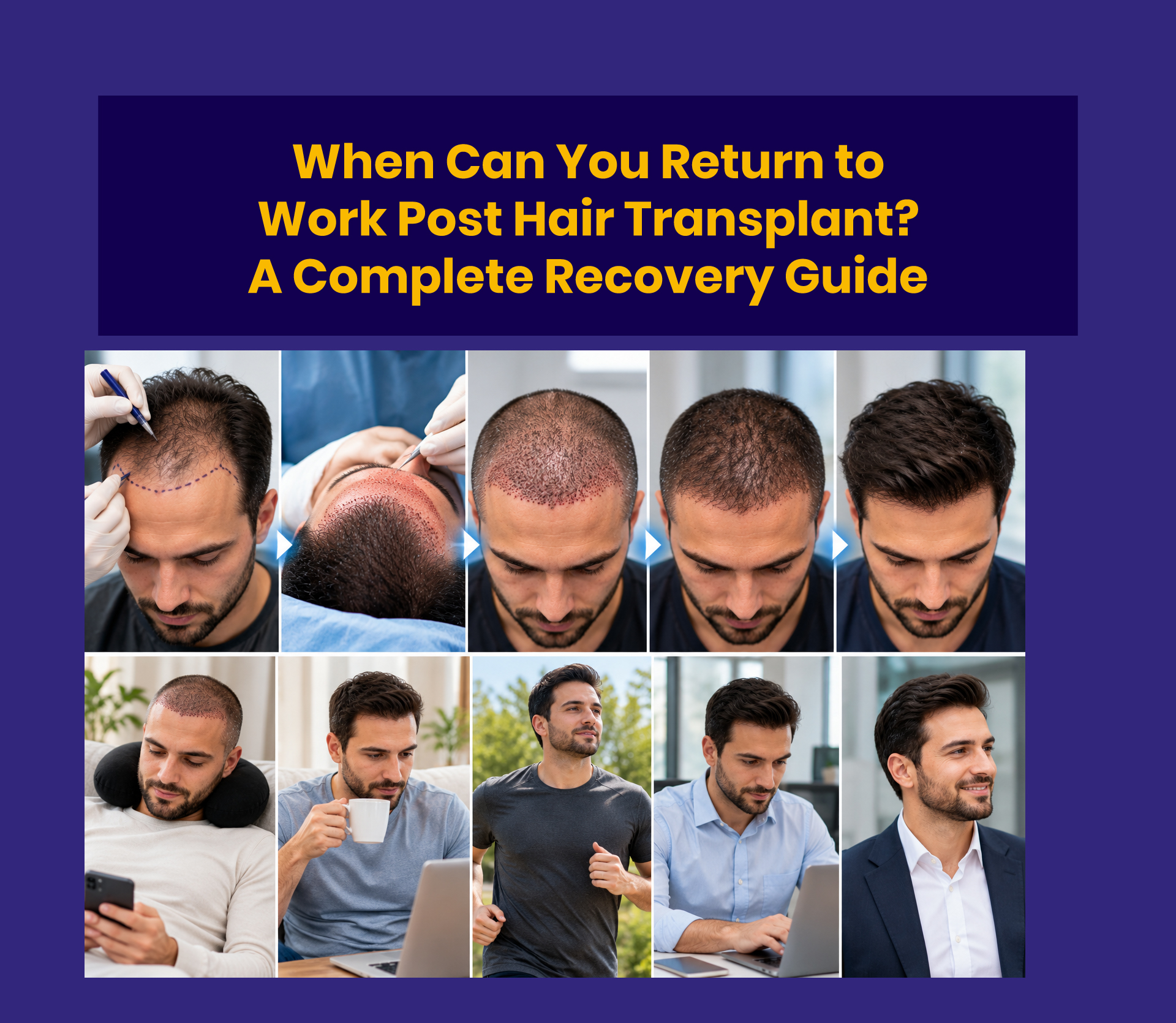
It helps to think of recovery in two parts. The visible healing of the scalp takes around two weeks for most people. Hair growth is a much longer process, taking many months.
Here’s a simple overview of the typical hair transplant recovery time:
- Days 1 to 3: Redness, swelling and tenderness. Rest, sleep with your head raised and follow your washing routine.
- Days 4 to 7: Swelling settles. Small scabs are visible around the grafts.
- Days 7 to 14: Scabs gradually fall away with gentle washing. Redness starts to fade.
- Weeks 2 to 4: Most visible signs have cleared, though some pinkness may remain.
- Weeks 3 to 8: Transplanted hairs often shed. This is expected and temporary.
- Months 3 to 4: New, fine hair begins to grow.
- Months 12 to 18: Final results usually become clear.
These are general guidelines. Age, skin type, general health and how closely you follow aftercare all affect how fast you heal.
When Can You Return to Work Post Hair Transplant?
Your job type matters as much as the procedure itself. Here’s how it usually breaks down.
Office-based and remote work. Many people return to desk work within three to seven days. If you work from home, you may feel ready even sooner, as long as you’re comfortable and not on strong pain relief. The main concern for office workers is usually appearance rather than physical risk, since redness and scabs can still be visible in the first week.
Customer-facing roles. If you meet clients or work in front of the public, you might prefer to wait seven to ten days, when most scabs have gone and the scalp looks calmer.
Physically demanding jobs. Work that involves heavy lifting, bending or a lot of sweating puts strain on the healing scalp. Builders, warehouse staff, fitness trainers and similar roles often need around 10 to 14 days off, and sometimes longer, depending on the surgeon’s advice.
Outdoor jobs. Sun, dust, heat and wind can irritate a fresh scalp. Outdoor workers usually need around two weeks before returning, and even then, sun protection and a loose, clean hat (once approved) are important for several weeks.
If you wear a hard hat, helmet or headset, check with your clinic before going back. Anything tight that presses on the grafts needs to wait.
Returning to Work After FUE vs. DHI
Both techniques extract follicles in the same way, so the donor area heals similarly. The difference lies in how grafts are implanted. In an FUE hair transplant, channels are opened first and the grafts placed into them. DHI uses an implanter pen to do both in one step, often with less shaving.
| Factor | FUE | DHI |
| Shaving | Donor and recipient areas usually shaved | Often possible with partial or no shaving of the recipient area |
| Early swelling and redness | Common for the first few days | Similar, sometimes slightly less noticeable |
| Scabbing | Usually clears in 7 to 14 days | Usually clears in 7 to 14 days |
| Return to office work | Often 3 to 7 days | Often 3 to 7 days |
| Return to physical work | Usually 10 to 14 days or more | Usually 10 to 14 days or more |
| Ease of hiding the procedure | Harder if fully shaved | Often easier with longer hair |
In practice, the hair transplant recovery time is similar for both. The bigger difference is cosmetic, and your surgeon will recommend the best option for your hair loss.
Can You Return to Work the Next Day?
Technically, some people do, especially those working from home with a small session. For most, though, it isn’t advisable.
The day after surgery is when swelling tends to build, and you’ll still be adjusting to medication and the washing routine. Many clinics also schedule a check-up or the first wash in the first two days. Even after a DHI hair transplant with minimal shaving, the scalp needs a little time.
A couple of days of rest lowers the risk of bumping or touching the grafts and makes the early hair transplant healing time much easier.
What Happens During the First Week Post Hair Transplant?
The first week is when graft protection matters most. On days one and two, you’ll rest, take your medication and sleep with your head elevated, ideally on a travel pillow or a few extra pillows. Swelling usually peaks around day two or three.

Curious About Your
Potential Results?
Speak with our specialists to understand what's achievable in your case and explore the best treatment options for your hair loss.
 Personalized
Expert Advice
 Treatment Options
That Suit You
 Realistic Results
You Can Expect
Discuss My Options
↰ No obligation.
Just honest guidance!
By day three or four, many clinics carry out the first gentle wash. You’ll learn how to clean the scalp without rubbing it. Scabs become more noticeable at this stage, and some itching may start. Resist the urge to scratch.
Between days five and seven, swelling has usually gone down and you’ll feel more like yourself. Scabs begin to soften and lift with careful washing. This is when many office workers return to their normal routine, provided they’re comfortable with how their scalp looks.
How to Care for Your Scalp While Returning to Work
Going back to work doesn’t mean aftercare stops. Good post hair transplant care during this stage protects your results.
Follow the Washing Routine Exactly
Stick to the products and methods your clinic gave you, even on busy workdays. Skipping washes can let crusts build up, while washing too hard can harm the grafts.
Keep Your Hands Off
Itching is common as the scalp heals. Touching or picking at scabs during a meeting is an easy habit to fall into, so be mindful of it.
Be Careful With Headwear
Only wear a hat once your surgeon approves it, and choose something loose and clean. Tight caps, helmets and hard hats can press on the grafts and should wait until you’re cleared.
Protect Your Scalp From the Sun
Fresh skin burns easily. If your commute or job involves time outdoors, cover your scalp and limit direct sun exposure for the first few weeks.
Stay Cool
Heat and sweating can irritate the scalp. Keep your workspace comfortable and avoid hot, stuffy environments where possible.
Take Your Medication on Time
Set reminders if you need to. Missed doses of antibiotics or anti-inflammatory medication can make the first week harder than it needs to be.
Avoid Alcohol and Smoking
Both can slow healing by affecting blood flow to the scalp. It’s best to avoid them for at least the first couple of weeks.
When Can You Resume Exercise After a Hair Transplant?
Exercise needs a gradual approach. Light walking is usually fine after the first few days. Gentle cardio is often allowed after one to two weeks, as long as it doesn’t cause heavy sweating.
Weight training, running and other intense workouts usually need to wait two to four weeks. Contact sports, where the head could be knocked, may need around a month or longer. Swimming pools, the sea and saunas often need to wait longer still, sometimes up to two or three months, because of the risk of infection and irritation.
Your full hair transplant healing time will guide these decisions, so check with your surgeon before increasing intensity.
Tips for a Comfortable Return to Work
- Book your procedure just before a weekend or a few days of leave to give yourself extra rest
- Ask your employer about working from home for the first week, if that’s possible
- Let your manager know about temporary limits on lifting or physical tasks
- Keep your post hair transplant care items at work, such as saline spray or medication from your clinic
- Grow your hair slightly longer before surgery, if your surgeon agrees, to help cover the donor area
- If you’re having a hair transplant in Turkey, allow time for the flight home and a day or two of rest before returning to work
- Avoid crowded commutes in the first few days, where your head might get bumped
- Keep follow-up appointments, even once you’re back in your usual routine
Frequently Asked Questions
Can I work from home the day after surgery?
Some people manage light computer work from home after a day or two. Listen to your body, though. Rest is more important than catching up on emails.
Will my colleagues notice I’ve had a hair transplant?
They may notice redness or scabs in the first week or two. After that, most visible signs fade, especially if the procedure was done with minimal shaving.
Can I wear a hat to hide the scalp at work?
Usually, but only once your clinic approves it. A loose, clean hat is best. Avoid anything tight that presses on or rubs against the grafts during the early post hair transplant recovery period.
When can I wear a helmet or hard hat?
This varies, but many surgeons advise waiting at least two weeks, sometimes longer. Ask your clinic before going back to a job that requires protective headgear.
What if my scalp is still red when I return?
Some pinkness can last a few weeks, particularly in people with fair skin. It’s usually normal, but contact your clinic if you notice increasing pain, swelling or discharge.
Ready to Take the Next Step
Toward Hair Restoration?
Receive expert guidance, a customized treatment plan,
and realistic expectations tailored to your goals.


Let's Discuss Your Hair Restoration Goals
Our team is here to answer all your questions.



 Offer valid for a limited time only!